Health and Safety Policy for Commercial Waste Ware and Rubbish Services
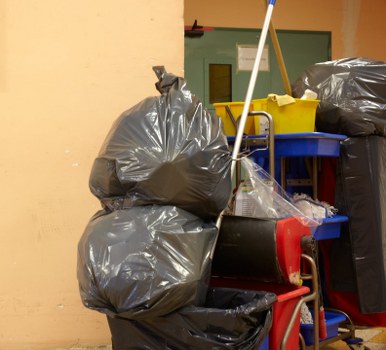 Purpose: This Health and Safety policy sets out the principles and standards that govern safe operations in a commercial waste ware environment and across our rubbish company service area. It is designed to protect employees, contractors, visitors and the public by reducing incidents arising from waste handling, transfer, storage and transport. The policy applies throughout the commercial rubbish collection area and to all work activities linked to waste management and disposal.
Scope: The policy covers the full range of commercial waste management activities, from on-site waste sorting and container handling to vehicle loading and off-site transfer. It recognises that different parts of the rubbish company coverage area present varied hazards, and that safe systems of work are required for hazardous waste, bulky items and mixed commercial refuse. The document promotes a proactive safety culture and continuous improvement in line with good industry practice.
![A large, blue industrial skip with a rectangular shape and reinforced metal sides, positioned on a flat surface outdoors. The skip has a slightly tapered front end with a sloped panel, and its lid is closed with multiple hinged sections, some of which are slightly misaligned. The surface of the skip shows signs of wear, with some minor scratches and chipped paint revealing metal underneath. A black rubber hose or cable is draped across the top, resting on the hinged lids. Surrounding the skip is an outdoor environment, possibly a driveway or yard, with no other objects or vehicles visible in the immediate vicinity. The lighting is natural, casting soft shadows. This image illustrates typical waste management equipment, suitable for rubbish removal services in a commercial or industrial context, such as in a town area within the postal code region inferred from the 'Health and Safety policy' page of commercialwasteware.co.uk, serving local businesses in the vicinity, including areas like [POSTCODE] or [TOWN], and reflects the practical aspect of rubbish disposal procedures supported by Commercial Waste Ware.](/pub/_photos/rubbish/f1341017088.jpg) Responsibilities: Management has the lead duty to implement and maintain this health and safety framework across the service area. Managers must ensure suitable risk assessments, safe procedures and adequate resources are in place. Employees are required to follow instructions, attend training and report hazards. Contractors operating within the commercial waste service area must comply with our rules and demonstrate appropriate competency before work begins.
Responsibilities: Management has the lead duty to implement and maintain this health and safety framework across the service area. Managers must ensure suitable risk assessments, safe procedures and adequate resources are in place. Employees are required to follow instructions, attend training and report hazards. Contractors operating within the commercial waste service area must comply with our rules and demonstrate appropriate competency before work begins.
Risk Assessment, Controls and Safe Systems
Risk assessment: A systematic process identifies and evaluates risks associated with waste handling, vehicle movements, manual lifting, sharps, biological contaminants and hazardous materials. Assessments are reviewed regularly and whenever work changes. Controls are implemented on a hierarchy basis: elimination, substitution, engineering controls, administrative controls and personal protective equipment (PPE).
Controls and equipment: Engineering and administrative controls include segregation of waste streams, mechanical lifting aids, secure storage of hazardous containers and safe traffic routes within depots. PPE such as gloves, eye protection, high-visibility garments and steel-toe boots are provided and maintained. Vehicles used across the rubbish collection service area are subject to daily checks, secure load procedures and regular servicing to reduce incidents.
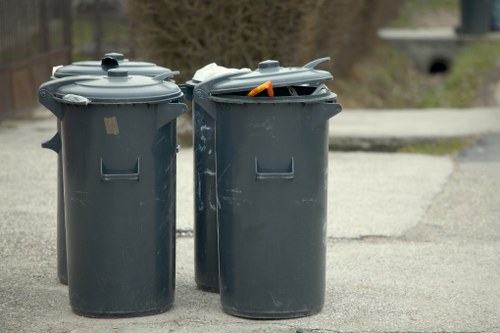 Monitoring and reporting: Incident reporting, near-miss recording and routine safety walks support a learning culture. Investigations focus on root causes and practical corrective actions. Safety performance is monitored using leading and lagging indicators and communicated across the commercial rubbish collection area to encourage a shared commitment to risk reduction.
Training, Competence and Behaviour
Training: Competence is critical in a busy waste handling environment. All staff receive induction training, task-specific instruction and refresher courses relevant to their roles in the waste management service area. Training covers manual handling, vehicle operations, hazardous waste awareness and emergency procedures. Records are maintained to ensure workforce capability is sustained.
Behavioural safety: Safe behaviours are encouraged through leadership, toolbox talks and clear expectations. Supervisors lead by example and reinforce safe practices in day-to-day operations. Employees are empowered to stop work if conditions are unsafe and to suggest improvements to reduce risk across the rubbish company service area.
Communication: Clear communication channels are maintained to ensure that changes to processes, new hazards or revised procedures are promptly shared. Safety notices, briefings and documented procedures support consistency. Language and literacy needs are accommodated so that all team members understand safety requirements and can act accordingly in the commercial waste coverage area.
Emergency preparedness: Emergency arrangements address spills, fires, medical incidents and vehicle accidents. Response plans are practical and available at operational sites. Regular drills and coordination with emergency responders help ensure an effective reaction should an incident arise anywhere within the rubbish company coverage area.
Contractors and visitors: Contractors working in the waste management service area must provide evidence of their safety systems and insurance. Visitors receive local site briefings and are escorted as necessary. Compliance checks and permit-to-work processes are used for higher-risk activities to maintain a consistent safety standard across commercial waste operations.
 Waste segregation and environmental protection: Proper segregation reduces the risk of contamination and physical hazards. Clear labelling, designated containers and secure storage of hazardous materials are enforced. Measures to prevent pollution and protect the environment are an integral part of safety planning across the commercial rubbish collection area.
![A person's hand is shown holding a small plastic bottle filled with clear liquid, positioned over a yellow rubbish bin with a rounded lid. The bin appears to be made of durable plastic with a slightly textured surface, and the lid is half-open, revealing some white and brown paper packaging inside. The background features a blurred urban environment, possibly a city street or residential area, with a building facade and large windows visible. The scene is well-lit with natural daylight, emphasizing the glossy surface of the plastic bottle and the vibrant yellow colour of the bin. This image visually represents waste disposal or rubbish collection activities, aligning with services offered by Commercial Waste Ware in the local area, potentially near [POSTCODE] or in [TOWN].](/pub/_photos/rubbish/f1288469968.jpg) Continuous improvement and governance: Leadership reviews safety performance periodically and sets measurable objectives. Audits, inspections and management reviews drive improvement. Where necessary, corrective actions are tracked until completion, and lessons learned are shared across the rubbish services coverage area to prevent recurrence.
Continuous improvement and governance: Leadership reviews safety performance periodically and sets measurable objectives. Audits, inspections and management reviews drive improvement. Where necessary, corrective actions are tracked until completion, and lessons learned are shared across the rubbish services coverage area to prevent recurrence.
Key commitments:
- Provide a safe working environment and suitable equipment;
- Identify and control hazards within the rubbish company service area;
- Ensure staff are competent and supported;
- Maintain open communication and prompt incident reporting;
- Continuously monitor, review and improve safety practices.
Conclusion: This policy represents a firm commitment to protect people, property and the environment across our commercial waste ware operations and rubbish company service areas. It underlines the belief that safety is an integral part of operational excellence and that every person has a role to play in delivering safe, reliable waste and rubbish services across the areas we serve.
