Commercial Waste Ware: Recycling and Sustainability Strategy for an Eco-Friendly Waste Disposal Area
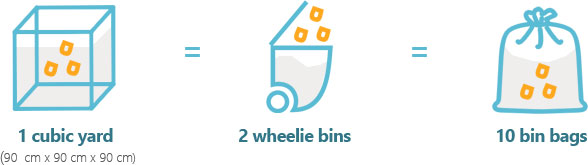 At Commercial Waste Ware we are committed to creating an eco-friendly waste disposal area that supports businesses across boroughs and helps transform the way commercial rubbish is managed. Our approach combines practical collection systems with education and partnerships so that every tenant, shop, and office can contribute to a more sustainable rubbish area. We recognise that local authority rules and the boroughs' approach to waste separation — typically kerbside segregation of food, glass, paper, and mixed recyclables — shape how we design our services.
Our sustainability plan sets out clear operational targets and measurable outcomes. We are not only a commercial recycling service but also a local partner that helps companies meet regulatory requirements, reduce landfill, and increase reuse. By aligning with municipal collection schemes and following the latest best practice for an eco-friendly waste disposal area, Commercial Waste Ware helps clients achieve real, verifiable reductions in waste sent to landfill.
![A close-up of a red plastic shopping basket filled with various cleaning products and tools, including spray bottles with blue, red, and green nozzles, a yellow bottle, a green spray bottle, and a blue container, all arranged on a reflective surface. To the right of the basket, a pair of purple rubber gloves and a multicoloured cleaning sponge with orange, yellow, green, and blue segments are partially draped over the basket's edge. The background is plain white, emphasizing the organized collection of cleaning supplies typically used for domestic or commercial rubbish removal and waste management tasks. This setup highlights the supplies often handled by companies like Commercial Waste Ware, particularly within environmental and recycling contexts, accessible to standards across the UK, including areas like the [POSTCODE] or [TOWN]. The overall scene emphasizes cleanliness and waste handling preparedness in a professional setting focused on sustainability and responsible rubbish disposal.](/pub/_photos/rubbish/f1854433360.jpg) We have adopted a recycling percentage target that is both ambitious and realistic: a 70% recycling rate across our client base by 2030. This target covers segregation at source, improved sorting at local transfer stations, and enhanced reuse pathways. To reach this level, we combine process improvements with incentives, clear labeling of bins, and tailored contracts for different business sectors.
We have adopted a recycling percentage target that is both ambitious and realistic: a 70% recycling rate across our client base by 2030. This target covers segregation at source, improved sorting at local transfer stations, and enhanced reuse pathways. To reach this level, we combine process improvements with incentives, clear labeling of bins, and tailored contracts for different business sectors.
Local Transfer Stations and Low-Carbon Collection
Local transfer stations are central to our logistics. We work with a network of transfer stations near the borough boundaries to reduce haul times and carbon emissions. These facilities accept segregated streams — organics, paper/card, glass, metal, textiles, and construction wastes — and ensure materials go to the appropriate recycling or processing facility. Our routing is designed so that vehicles take the shortest path to a transfer station that can handle specialised commercial waste streams.
We operate a growing fleet of low-carbon vans and vehicles that reduce emissions across collection routes. Low-emission vans, including electric and hybrid models, form the core of our daytime collection and consolidation network. Combined with route optimisation software, reduced idling and scheduled consolidation at transfer stations, this approach helps lower our carbon footprint while maintaining reliable service.
![A female worker wearing a yellow safety helmet, high-visibility vest with red and yellow stripes, and gloves is standing outdoors on a paved surface near the entrance of a storage container or warehouse. She is holding the handle of a small portable television or monitor with a dark grey casing, and the device is slightly tilted forward. In the background, there are stacks of old computer monitors and other electronic waste organized on the ground, with some leaning against the container's side. The setting appears to be a rubbish removal or recycling yard, possibly in the vicinity of [POSTCODE], serving [TOWN]. The scene emphasizes proper handling and collection of electronic waste, which aligns with commercial waste management services provided by Commercial Waste Ware in the context of environmental sustainability and recycling efforts.](/pub/_photos/rubbish/f1375057760.jpg) From the perspective of the boroughs' approach to waste separation, our vehicle crews are trained to recognise local bin formats and contamination issues and to advise site managers on easy fixes. That on-the-ground support helps increase capture rates of recyclables — and contributes directly to our 70% recycling target.
From the perspective of the boroughs' approach to waste separation, our vehicle crews are trained to recognise local bin formats and contamination issues and to advise site managers on easy fixes. That on-the-ground support helps increase capture rates of recyclables — and contributes directly to our 70% recycling target.
Partnerships for Reuse and Community Benefit
Commercial Waste Ware has active partnerships with charities and social enterprises to maximise reuse and donation of items that are still in good condition. Rather than consigning surplus office furniture, textiles, or appliances to shredding or energy recovery, we prioritise redistribution through vetted local charities, training organisations and community reuse centres. These relationships deliver social value and reduce emissions from manufacturing new goods.
Key elements of our sustainable rubbish area programme include:
- Partnerships with charities for reuse and redistribution of gently used office equipment and stock;
- Direct routes to local transfer stations for segregated commercial streams;
- Low-carbon van fleets and route optimisation to shrink transport emissions;
- Site-specific waste separation plans that reflect each borough's guidance on recycling and organics.
We maintain formal agreements with community organisations so that materials diverted from landfill become resources for local projects. This closed-loop mindset helps clients demonstrate corporate social responsibility through measurable outcomes — including weight of goods reused and estimated carbon avoided.
Operationally, our teams focus on three pillars: minimise, separate, and redistribute. Minimise means helping clients reduce packaging and choose durable goods. Separate means implementing clear bin systems and staff training so materials arrive at transfer stations uncontaminated. Redistribute means creating verified donation pathways and working with certified recyclers so materials are processed back into supply chains.
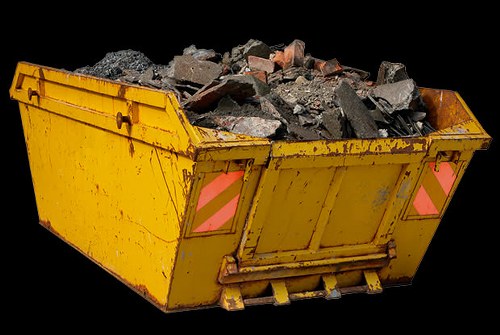 We also invest in data and reporting. Monthly recycling performance dashboards show progress to the 70% target and break down streams by weight and destination. This transparency allows clients to see how their actions — for example, improved cardboard flattening or dedicated glass bins — affect overall performance in the sustainable rubbish area.
![A large commercial rubbish collection vehicle, painted predominantly in bright green, is shown from a side and rear view. The vehicle has a robust, rectangular body with a metallic finish, designed for waste collection and disposal. The body features a hydraulic lifting mechanism and a rear-loading hatch, which is partially open, revealing the interior space for waste. The front cab of the truck is white with black details, including side mirrors and window frames, contrasting with the vibrant green waste compartment. The truck is parked on a clean, paved surface typical of urban or industrial areas, with no other objects in the immediate environment. The lighting suggests a clear day, highlighting the textures of the smooth, metallic surface of the waste body and the slightly matte finish of the cab. This image, associated with Commercial Waste Ware, illustrates the type of refuse collection vehicles used for sustainable rubbish removal services, which are essential for supporting recycling initiatives and waste management in towns and cities, including the vicinity of [POSTCODE].](/pub/_photos/rubbish/f1360630336.jpg) Finally, our commitment to continuous improvement keeps us aligned with local borough initiatives. We monitor changes in municipal waste policy, adjust our segregation guidance to match local rules, and pilot new solutions such as on-site baling or dedicated food-waste collections for large kitchens. By combining practical logistics, charitable partnerships, and a modern low-carbon fleet, Commercial Waste Ware offers an effective, measurable pathway to a greener commercial recycling environment.
Finally, our commitment to continuous improvement keeps us aligned with local borough initiatives. We monitor changes in municipal waste policy, adjust our segregation guidance to match local rules, and pilot new solutions such as on-site baling or dedicated food-waste collections for large kitchens. By combining practical logistics, charitable partnerships, and a modern low-carbon fleet, Commercial Waste Ware offers an effective, measurable pathway to a greener commercial recycling environment.
